A euro cylinder
A euro-profile cylinder is the visible key-operated component often found in uPVC and some composite or timber doors. It passes through the door and connects to a lock case. Cylinder length, fixing position, cam and operation type vary, so a replacement must match the hardware and door configuration.
A cylinder may operate a multipoint mechanism, but that does not make the cylinder itself the whole multipoint lock. If the key turns and the door still does not secure, the fault may lie elsewhere. Measure or identify a cylinder carefully and avoid posting pictures that reveal key cuts or an address.
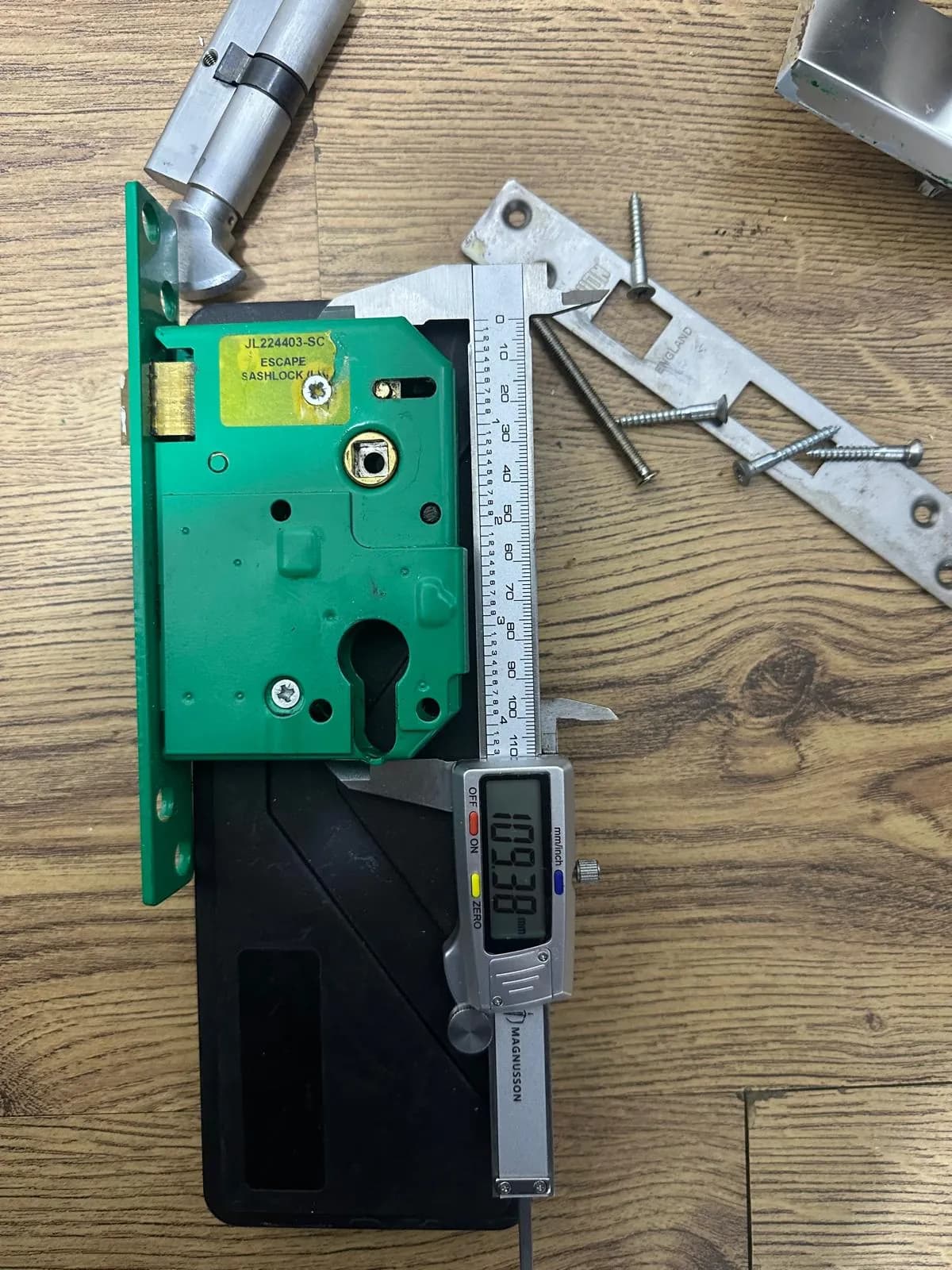
A mortice lock
A mortice lock case sits within a cavity cut into the door edge. It may be a deadlock or sashlock, and its dimensions and operating details matter when replacing it. A visible faceplate or handle does not show every measurement needed to choose a compatible case.
BS 3621 is a standard for lock assemblies operated by key from both sides. It does not mean that every mortice lock meets that standard. Check the exact product marking and certification record, and confirm any insurer requirement in writing. Ask a locksmith to identify the case if you cannot read the markings safely.
How to describe yours
Share a wide photo of the door, plus a close view of the handle and faceplate, without showing a key's cuts. Say whether the key turns, whether the handle moves, and whether the door is currently secure. A professional can tell you what additional measurements are needed.
RapidLock lists residential lock and replacement services. Its replacement and rekeying page explains how to ask about a specific lock. The help centre is available for other common lock questions.
Sources and further reading
These sources support the general guidance above. Standards may change; check the issuing body for current editions and product scope.