Begin with symptoms and condition
Write down what happens each time: the key will not enter, turns with resistance, turns without moving the lock, or works only when the door is pushed. Note any recent change, visible damage or lost key. This account is more useful than deciding the mechanism is broken before it has been checked.
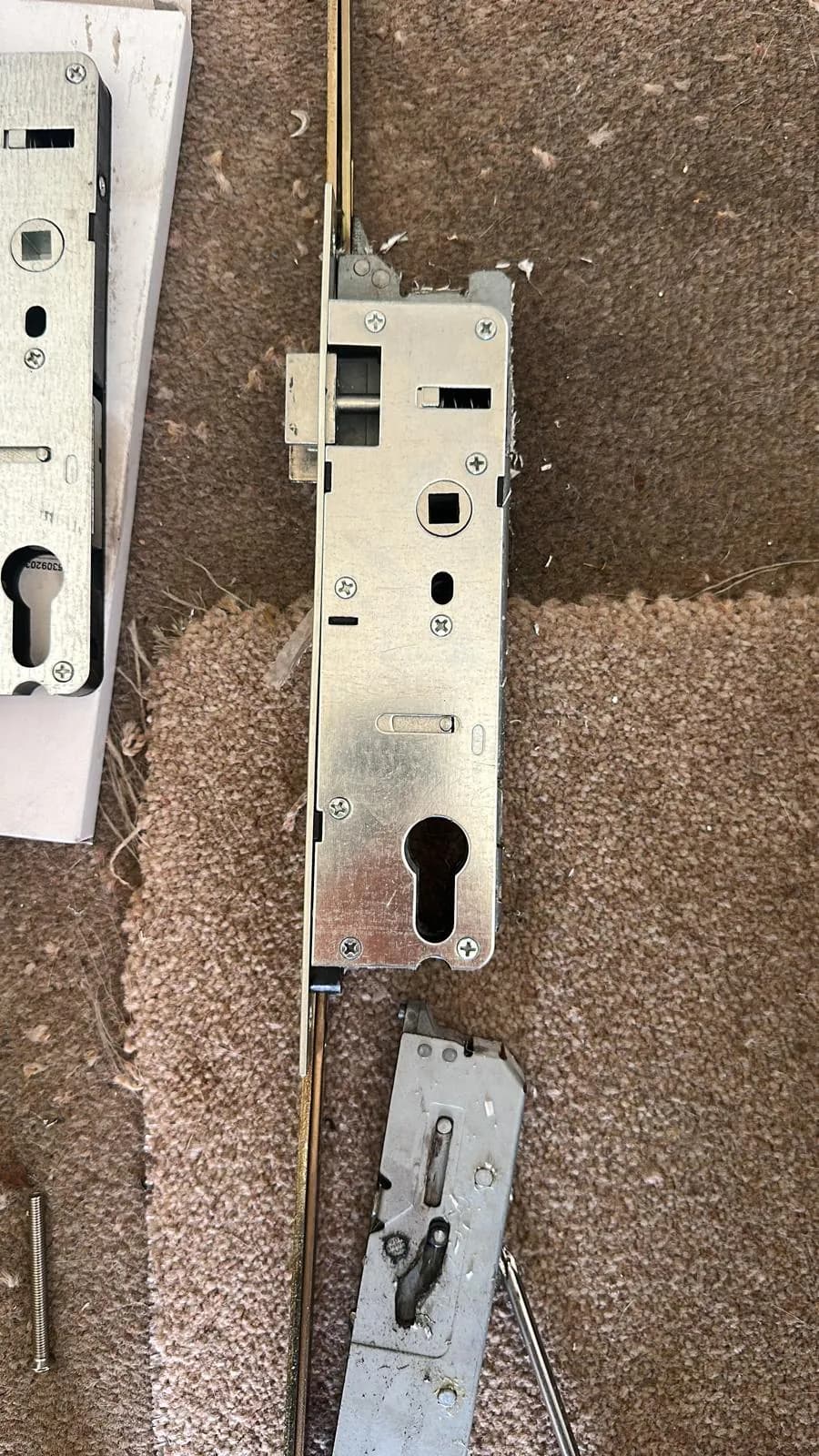
Some faults are local to a cylinder; others involve a lock case, multipoint strip, keeps, hinges or door alignment. A replacement cylinder cannot correct a door that is pressing heavily against its frame. Likewise, adjusting the door will not repair a damaged gearbox. The system needs to be considered as a whole.
What repair may mean
A repair could involve adjustment, a compatible component, service to a mechanism or replacement of one worn part. The available option depends on the product and its condition. Ask what evidence supports the diagnosis, what part will be worked on and whether the remedy addresses the cause rather than only the symptom.
If the lock works intermittently, do not wait for it to fail completely before describing the issue. An intermittent fault can still affect security or access. Avoid repeated force, improvised lubrication and trial adjustments that might make the door harder to open or secure.
When replacement may be considered
Replacement can be considered when a component is broken, excessively worn, unsuitable, unavailable or cannot be repaired to a reliable condition. A complete door replacement is a separate decision from changing a lock. Ask whether the quote covers a cylinder, lock assembly, door furniture or a complete doorset, and what compatibility constraints apply.
Security claims should be specific. A standard or rating may relate only to one component or to a tested doorset configuration. Check the exact model and scheme, and ask your insurer for any written lock requirement. For flat entrance doors, include fire performance and building approval in the decision.
Compare options before work starts
Ask for the diagnosis, proposed work, parts, likely cost and anything that could change the total. Request an explanation of how the door will operate afterwards and whether existing keys will still work. If the scope changes once the hardware is inspected, agree the revised work before proceeding.
RapidLock lists lock repair, lock replacement and rekeying services. Those labels do not confirm which option fits your lock without an assessment. You can review its lock replacement and rekeying information or its repair service.
A quick checklist
- Describe the fault and when it occurs.
- Ask which component is faulty and why.
- Clarify parts, keys, scope and price before work starts.
- Check certification and fire-door requirements where relevant.
Sources and further reading
These sources support the general guidance above. Standards may change; check the issuing body for current editions and product scope.