Start with what the door does
Describe the sequence rather than diagnosing the part: does the handle move down, does the key turn, and do the locking points appear to engage? Note whether the door is open or shut when the symptom occurs. These details help distinguish a cylinder problem from a fault elsewhere in the door system.
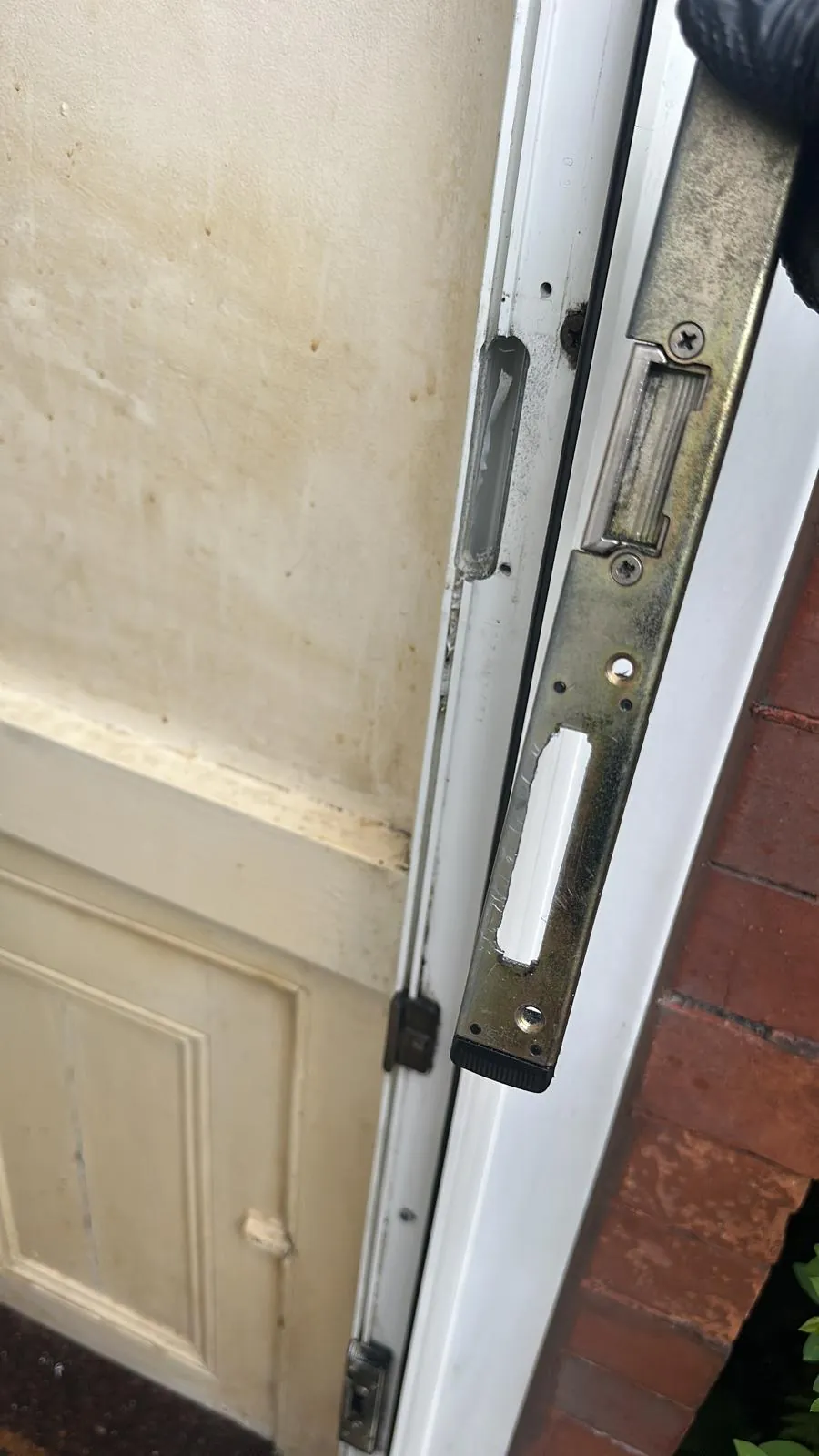
If the door is open and you can see the edge safely, look for a loose handle, visible damage or a locking strip that looks displaced. Do not put fingers near moving hooks or rollers. Do not remove covers or operate a mechanism with the door open unless its manufacturer says that is safe; some mechanisms can be damaged by an incorrect test.
Notice any pressure or position change
If the handle works with the door open but becomes stiff when the door is shut, that difference is useful evidence. It can indicate that locking points and their keeps are not meeting cleanly, though it does not prove why. A door may also change position with wear, loose fittings or movement in the frame.
Record whether lifting the handle, pressing the door inward, or pulling it towards you changes the feel. Do not keep repeating a movement that needs force. Extra pressure can turn an intermittent fault into a broken handle, key or gearbox, and can leave the door unable to lock.
Separate the cylinder from the multipoint mechanism
The cylinder is the part the key enters. A multipoint mechanism is the wider assembly, usually operated by the handle and key, that moves locking points along the door edge. A key that will not turn at all suggests a different symptom from a key that turns but does not operate the mechanism.
A key can also resist because the door is putting pressure on the locking points, because the cylinder is worn, or because there is another fault. Avoid oiling the cylinder or using household sprays as a general fix. Product makers may specify suitable maintenance for their own cylinders; check that guidance before applying anything.
When to stop and get help
Stop if the key begins to bend, the handle needs force, a part is loose, or the door will not secure. If the door is open, avoid closing it if you have reason to think it may not reopen. If it is shut and cannot be locked, consider immediate safety and the security of the property while arranging suitable help.
When contacting a locksmith, share the door material, what the handle and key do, whether the door is open or closed, and a clear photograph of the handle and door edge if safe. RapidLock lists uPVC door and window lock repairs among its services; ask about the specific issue and current availability. See the uPVC repair service or use the emergency contact route.
A quick checklist
- Does the handle move freely with the door open?
- Does the key turn, and does it move the handle or locking strip?
- What changes when the door is pushed, pulled or lifted?
- Is the door currently secure? State that first when asking for help.
Sources and further reading
These sources support the general guidance above. Standards may change; check the issuing body for current editions and product scope.