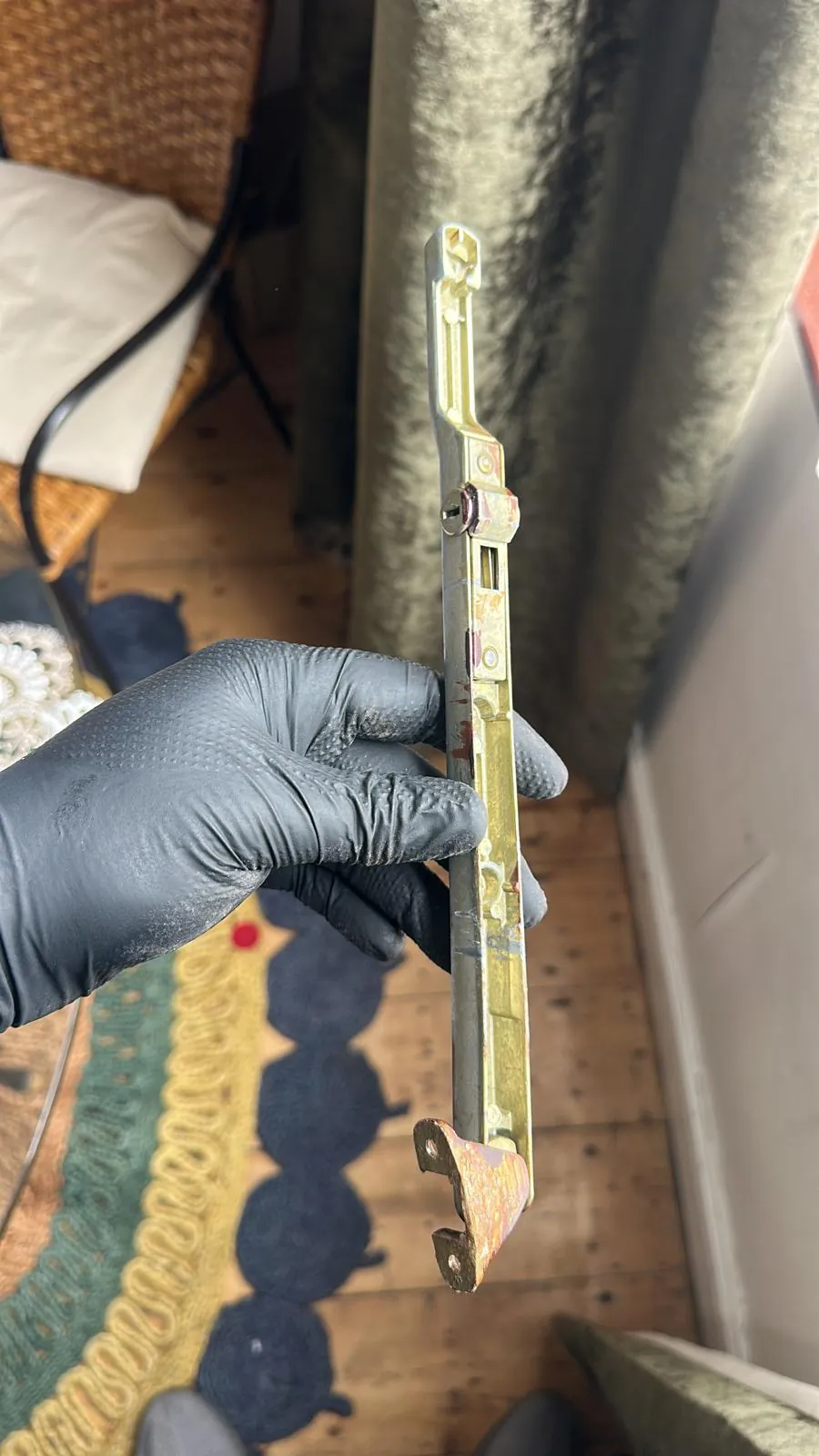
The parts work as one system
A common uPVC door arrangement has a handle-operated mechanism running along the door edge. Depending on its design, it may move hooks, rollers, bolts or other locking points into keeps fixed to the frame. A gearbox at the handle area transfers movement through the strip. The key cylinder controls the lock in a way that depends on the mechanism fitted.
Names and layouts vary between manufacturers and product generations. Two doors that look similar from the outside can use different centre cases, backsets, spindle dimensions, handing or locking-point arrangements. A replacement part therefore needs to match the existing setup and door, rather than merely looking close.
Symptoms are clues, not a parts list
A handle that lifts but does not lock may point to misalignment, a stiff mechanism, a damaged gearbox or another issue. A key that turns without moving the points may indicate a connection or mechanism fault. A key that resists only with the door closed can suggest pressure at the frame, but it does not prove the frame is the cause.
Useful observations are comparative: what happens with the door open versus shut, whether the key turns smoothly, whether the handle returns, and whether the same issue appears at every locking point. Do not dismantle a mechanism to identify it if the door is your only secure exit or could become stuck.
Why fitting and alignment matter
The locking points need to meet their keeps as intended. If the door has dropped, the hinges or frame have shifted, or seals are creating pressure, the handle may require more effort. Replacing the gearbox without addressing the reason it failed can lead to the same strain being applied to a new part.
An accurate assessment considers the door, frame, keeps, cylinder and mechanism together. A repairer may need the manufacturer markings, measurements and photographs to identify a compatible part. Avoid adjusting keeps or hinges by trial and error: moving one point can affect the way other points engage and may affect weather sealing or safe closing.
What to record before asking for help
Take a wide photo showing the door and frame, then close views of the handle and visible markings on the door-edge strip. Keep keys and key cuts out of photographs. Record the door material, what the handle and key do, and whether the problem happens open, shut or both. Mention any recent change in stiffness or door fit.
RapidLock lists uPVC door and window lock repairs as a service. The cause and suitable repair cannot be confirmed from a symptom alone. Its repair page explains the type of enquiries it handles; you can also use the help centre for short answers.
A quick checklist
- Photograph the full door and frame, handle and visible strip markings.
- Describe what happens with the door open and shut.
- Keep keys out of close-up images and do not share key cuts.
- Do not force a stiff handle or dismantle a mechanism.
Sources and further reading
These sources support the general guidance above. Standards may change; check the issuing body for current editions and product scope.