Why the sequence matters
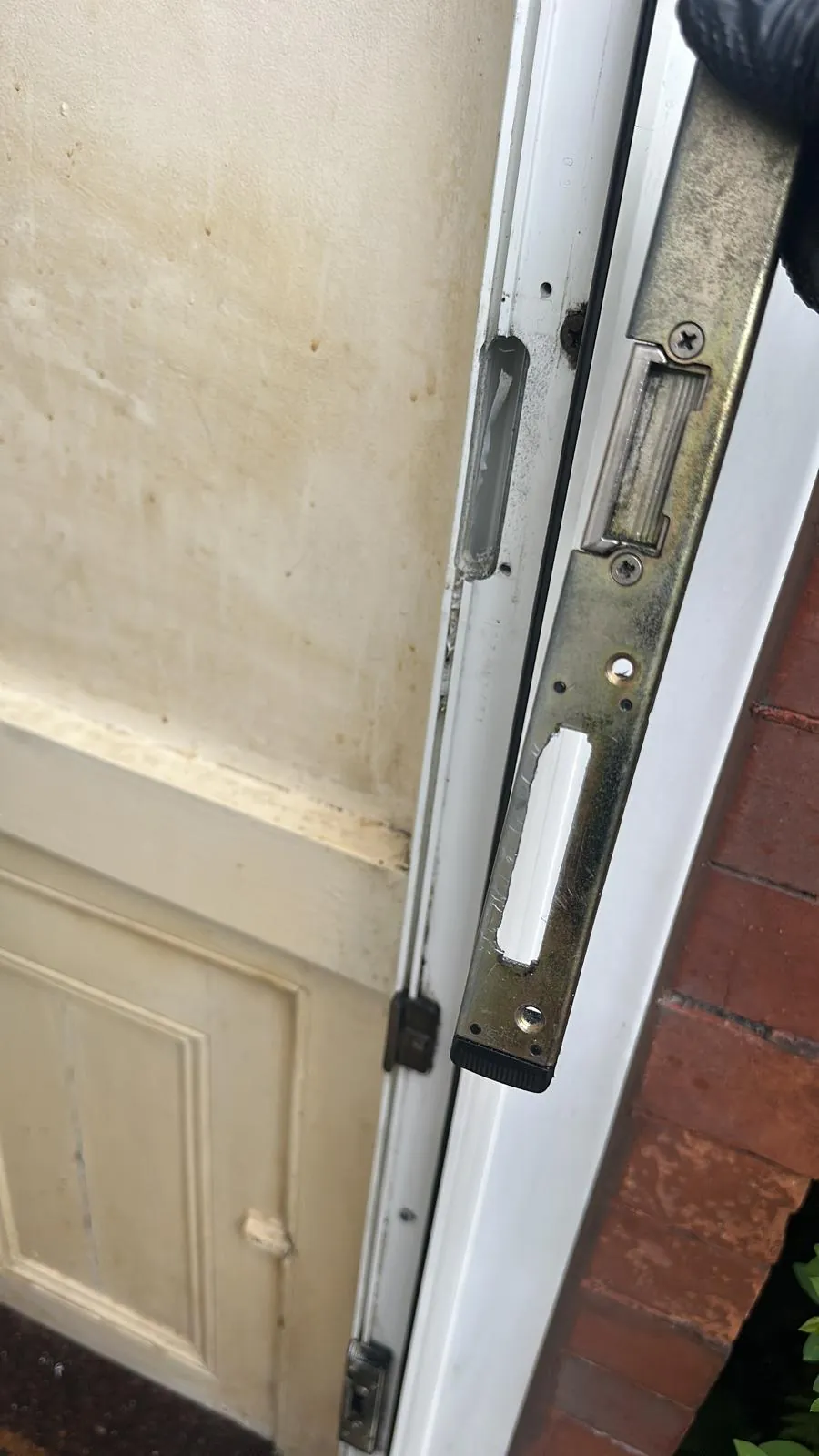
On many multipoint doors, lifting the handle moves locking points and the key then secures the mechanism. The exact sequence varies. If the key stops turning after the handle is lifted, the mechanism may be under pressure, the locking points may not be aligned with their keeps, or the cylinder or gearbox may have a fault.
That list is not a diagnosis. Note whether the key turns before lifting the handle, whether it turns when the door is open, and whether the door has become harder to close. Avoid repeating the sequence if the key is bending or the handle is stiff.
What not to do
Do not use pliers on the key, lean on the handle, or spray household oil into the cylinder. Force can break a key or damage an internal part. If the door is shut and you are unsure it will reopen, do not experiment with a sequence that could leave the mechanism engaged.
If it does not lock securely, say so when asking for help. RapidLock lists uPVC door and window lock repairs; the team will need the actual symptoms to discuss the next step. See the full uPVC diagnosis guide.
Sources and further reading
These sources support the general guidance above. Standards may change; check the issuing body for current editions and product scope.