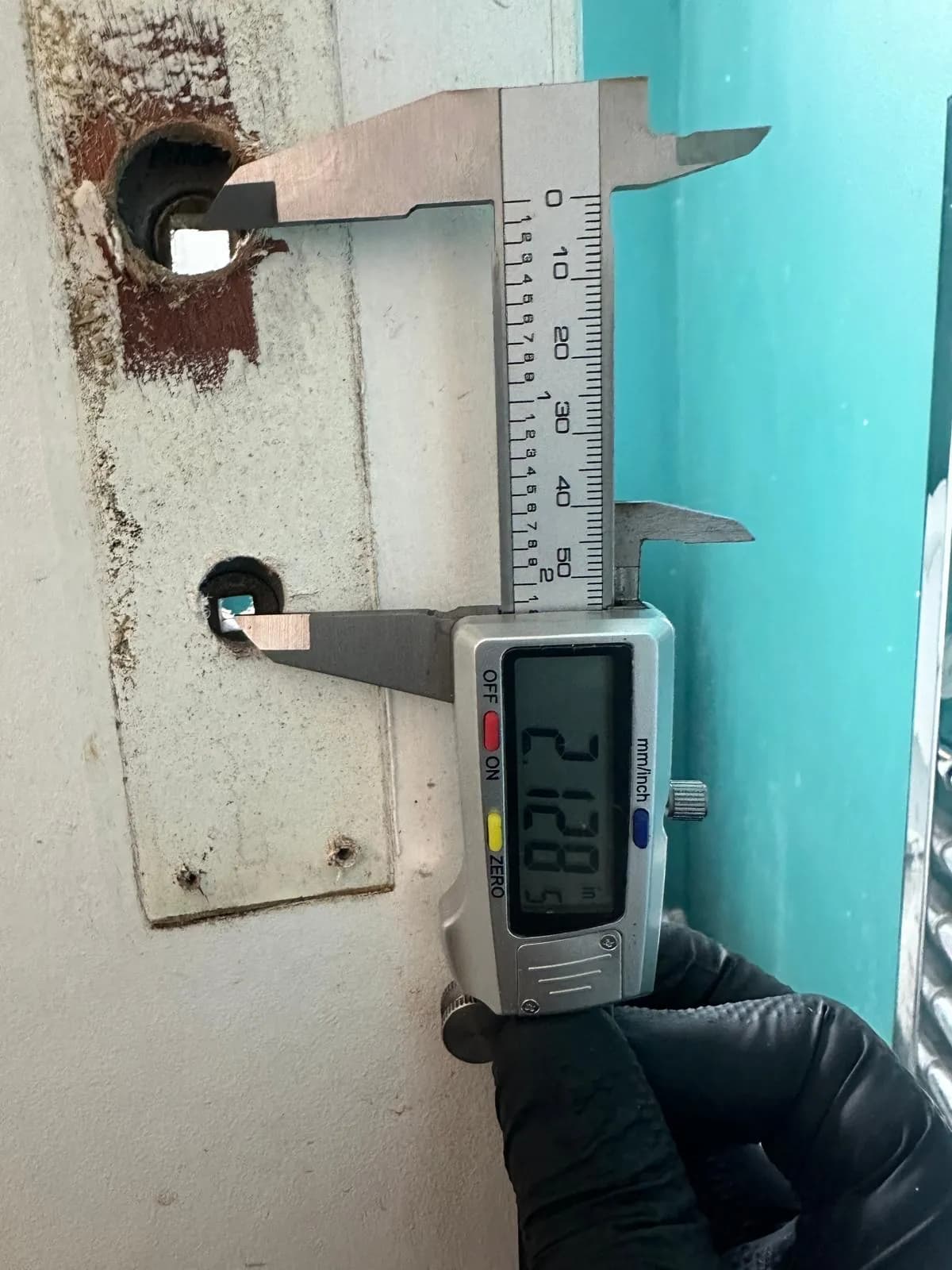
A lock meets a frame
When a door closes, its latch and locking points need to meet the corresponding keeps in the frame. A small change in position can affect that contact. You may notice a scrape, a need to push or lift the door, a change in the gap, or a handle that becomes harder to move when shut.
Weather seals, hinge wear, fixings, frame movement and the mechanism itself can all be relevant. The same symptom can have different causes. Looking only at the lock or only at the hinges can miss a problem elsewhere in the door assembly.
Compare without forcing
If safe, note whether the handle moves more easily with the door open. Do not repeatedly operate a stiff mechanism or let a door close if you may be unable to reopen it. Avoid adjusting hinges, keeps or seals without knowing how the door is designed; changes can affect fit, weather sealing and locking engagement.
Record the point where the door seems to touch and whether the change is recent. If the door is a fire door, do not alter it casually. Report damage or faults to the building's responsible person where appropriate. For a lock that will not secure, RapidLock's repair service describes its enquiry route.
Sources and further reading
These sources support the general guidance above. Standards may change; check the issuing body for current editions and product scope.